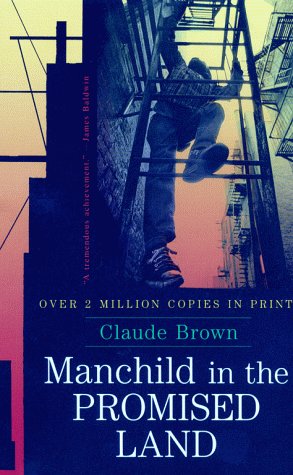
"Look, Mama, when people start ruling people and they rule 'em wrong, in a way that's harmful to them, they have to stop them. They've got to rebel; they've got to get out from under their rule. Sometimes it requires a fight, but it's always going to require a little bit of commotion, a little bit of anger, and sometimes violence.
You've got to stop them before they destroy you. That's all that's going on around here. Everybody is rebelling. You see all the young boys going around here using drugs. They're rebelling, that's all it is. They're rebelling against their parents. If they were any drugs around here when I was a little boy, I would've been using 'em too. I had to rebel. I had to get away from all that down-home nonsense you [have] been talking."
What is embodied in this short passage is the notion that any anti-racist stance cannot be a passive one. Any point of view which begins with something to the effect of 'well my [white] ancestors never held slaves..' or (more commonly here in the United Kingdom) 'I don't mean to be racist but...' -- any opinion which begins in such a way masquerades (at best) as passive anti-racism but in all honesty is just racism by another name. The need for any anti-racist opinion to be an active one is illustrated clearly by Brown.
The last sentence is important as well. In one single line Brown characterises the changing scenes in which the typical African American alpha-male appears. Whilst his parents grew up in and were more familiar with the Southern countryside, Brown and his brothers and sisters were only used to the urban sprawl of Harlem. They were the first generation to grow up in the urban ghettos of the Northern United States, and the first generation of African Americans not linked to the cotton fields and plantation life. Brown realises his mothers lack of understanding about what is happening out on the streets of Harlem is born out of her Southern attitudes and his inability to change.
One should not forget that Brown himself did not have to change because he was born in the ghetto and grew up there. What was foreign to his mother and his parents generation was second nature to him. He characterises this earlier on in the book through the linguistic differences: his parents generation spoke words that he and his brothers and sisters did not know the meaning of, and his generation had their own modern ghetto slang, culminating the use of the word 'baby'.
Tuesday, March 31, 2009
A Quick Lesson from Mr. Claude Brown

Thursday, August 09, 2007
Will Richard Wrights Please Make Themselves Known To Black Boy
This morning BBC Radio Four's Today programme reported that a Reach investigation concluded black boys needed more black role models within their own communities. (Read how the BBC website reported this here.)
What I think is needed is a wider range of people to look up to from a variety of fields. It is okay to have entertainers as role models. The number of rappers who openly glamorise gun crime is very small. Recently, some rappers have even rapped for peace and equality. In Brazil, the only tangible way to escape the slums is to become a professional footballer (football just happens to be enjoyable). Well, in Britain, while a lot of global rappers would like to believe that hip hop is the only way to escape the ghetto, this is not actually the case. Going to school, getting an education and getting a good job is the most viable way to make something of one's life. Role models are needed within the black community to make this appear to be the reality that it is.
Even back in Claude Brown's Harlem, there were local heroes, but they were most usually the biggest hustlers and the guys who could stake a viable claim to have killed the most men and had sex with the most women. But it is worth remembering that the places in question are Moss Side, Brixton &c. in the 21st Century and not Harlem in the 1930's. But the example of Claude Brown is an important one to bare in mind. The fact that he emphasised that crime was the only way out of poverty is a paradox because he made a success of his life through writing.
For the black middle classes to become more involved at a local level, I think the first step has to be taken on a national level with regard to this issue. People like Benjamin Zephaniah must first make themselves known nationally, then maybe something might happen at local levels in black communities throughout Britain.
As the authorities would like to believe:
There's a big town 'cross the whiskey line
And if we turn the right cards up
They make us boss the devil pays off
And them folks that are real hard up
They get their local hero
Somebody with the right style
They get their local hero
Somebody with just the right smile
(c) Bruce Springsteen (ASCAP)
Yours, wherever you may be,
Daniel C. Wright.
Friday, May 11, 2007
Winning In The Ghetto: Explaining Harlem Through The Life And Times Of Malcolm X
The complexities and paradoxes of
GEOGRAPHICS
To begin, it is important to understand the significance of the geography of
While Harlem is basically a single borough, its streets are what
The grid system played an important part in the development of Malcolm X. The logistics of such a system results in the creation of a series of generic corners. At busy intersections, the corners become a focal point. Baldwin notes how he: “sometimes found myself in Harlem on Saturday nights, and I stood in the crowds at 125th Street and Seventh Avenue, and listened to the Muslim speakers[6].” The Nation of Islam speakers were not the only ones who preached on soapboxes and step-ladders at the bustling intersections to anyone who would listen. Malcolm X realised this:
. . . the big trouble, obviously, was that we were only one among the many voices of black discontent on every busy
We can see from this that the grid system in place across
A SPACE FOR CHANGE
It is possible to understand
Considering this, we can apply a similar theory to the hustling of Malcolm X. He managed to sell marijuana all up and down the East coast of the
The notion of Harlem being the black man’s
“I was icily determined - more determined, really, than I then knew - never to make my piece with the ghetto but to die and go to hell before . . . I would ‘accept’ my place in this Republic[12].”
His anger at the misdemeanours of life on the Harlem streets is later adopted by both Brown and, to a greater extent, Malcolm X, yet his initial unwillingness to live out the gangster lifestyle even for a short time indicates that, for all it’s lacking of moral standards, Harlem can a place to empower the individual. In the case of
Any urban space has the ability to change any man in any number of ways. The specific characteristics of Harlem life clearly result in everyone being someone, and Baldwin seems quite resigned to the fact that change happens in
GOOD VERSUS EVIL
Certain characteristics of the
This distortion as far as the characteristics of acceptability are concerned is paralleled by a greater sense of what is unacceptable. Claude Brown, for instance, remarks how stealing from the poor is utterly wrong when a numbers banker failed to pay out after a win[18].
What is good and what is wrong is very different within the
“I have long had a very definite tendency to tune out the moment I come anywhere near either a pulpit or a soapbox. What … men were saying about white people I had often heard before[20].”
What
To reduce it to a lower common denominator, black is portrayed as good, while white is portrayed as evil.
SLEAZE PIT
The evils of Harlem made the area between
The young Malcolm X did not take long to notice that white people were not a novelty in Harlem; as he put it, “
The riot of 1943 had a detrimental impact upon
With substantial amounts of money involved, Malcolm X played a part in helping rich white men (and thus usually powerful and important white men) live out their bizarre sexual fantasies. The women who ran the operation now needed ‘steerers’ to get her white clients into, and out of, Harlem without them being seen; this is where Malcolm came in. His first hand experience of this business resulting in him declaring “
Interestingly, he notes that, in this black-white nether world, no one ever judged the white men[26]. Later, however, Malcolm X would realise the errors he had made in his life, and as he became detached form the
The transparency of these exchanges is debatable. The chances are that tails of these services being provided by African-American women for (often ageing) white men slipped out into common knowledge somewhere down the line, whether it be by word of mouth or a passer-by seeing something odd. If we take this into consideration, and combine it with some hard facts, we get a detailed picture of the black-white relationship in
Ø Authorities invested next to nothing in
Ø Mayor LaGuardia closed the
Ø Rents in Harlem were higher than most of the rest of
Ø White merchants in
Ø A white policemen shot a black soldier at the Braddock[33].
The latter two were the cause of the 1935 and 1943 riots respectively. If we take all these into consideration, we get a greater understanding of why Baldwin asserted that “one did not need to prove to a
To conclude, by reading The Autobiography of Malcolm X in close relation to The Fire Next Time and Manchild of the Promised Land under the four guises outlined previous, we get a good sense of the urban landscape and the social make-up of the Harlem which transformed Malcolm X, first into a criminal, and then permitted him to be a devoted believer in the dangerous notion of the Nation of Islam: the white man is the devil. It is important to understand both aspects of Malcolm X’s life to get a grasp of the paradoxes which were present in
[1] Autobiography of Malcolm X, page 157
[2] Autobiography of Malcolm X, page 191
[3] The Fire Next Time, page 26
[4] The Fire Next Time, page 65
[5] Manchild in the Promised Land, page 179
[6] The Fire Next Time, page 46
[7] Autobiography of Malcolm X, page 317-8
[8] Manchild in the Promised Land, page 53
[9] Manchild in the Promised Land, page 119
[10] Manchild in the Promised Land, page 198
[11] Autobiography of Malcolm X, page 192
[12] The Fire Next Time, page 29
[13] The Fire Next Time, page 32
[14] The Fire Next Time, page 32
[15] Autobiography of Malcolm X; page 171
[16] Manchild in the Promised Land, page 51
[17] Section 5-401 of the New York Constitution, as cited by http://www.gambling-law-us.com/State-Laws/New-York/
[18] Manchild in the Promised Land, page 209
[19] Manchild in the Promised Land, page 61
[20] The Fire Next Time, page 46-7
[21] The Fire Next Time, page 46
[22] Manchild in the Promised Land, page 63
[23] Autobiography of Malcolm X, page 169
[24] Autobiography of Malcolm X, page 178
[25] Autobiography of Malcolm X, page 209
[26] Autobiography of Malcolm X, page 209
[27] Autobiography of Malcolm X, page 209
[28] The Fire Next Time, page 28
[29] Manchild in the Promised Land, page 190
[30] Autobiography of Malcolm X, page 202
[31] The New York Times, December 13, 1937, page 02; “Negro Rents Held Artificially High; Post, at Hearing, Says That Harlem Tenants Are ‘Gouged’ Since They Cannot Move” http://select.nytimes.com/gst/abstract.html?res=F10C14FB3B5A157A93C7A81789D95F438385F9
[32] Autobiography of Malcolm X, page 202
[33] Autobiography of Malcolm X, page 203
[34] The Fire Next Time, page 48
Friday, April 13, 2007
My Week
This week feels though it has almost been a wasted week. But no entire week can ever be entirely wasted. I remember Ross once saying that sometimes it is good to completely burn out. Whilst I won't disagree, it is also good to take a step back. Since Good Friday, I have reverted back to old habits. I haven't really done anything. I haven't been anywhere or seen anything. I haven't acquired first hand experience of our transport system and haven't seen anything to suggest I have made a journey of any significance. All I have done is enjoyed the sunshine. I re-read James Baldwin's The Fire Next Time and am once again part-way through Claude Brown's Manchild In The Promised Land. As a first chapter, the opening section really is a baptism of fire into a world quite alien to me.
For two solid days I did very little but mess around on Facebook. This I consider to be a useless endeavour. Friends added me as a 'friend' and I added people as 'friends'. People who I haven't seen since High School (and who I truthfully hope never to see again) have listed me as 'friend'. I have pages of these 'friends' who I never even used to speak to at all at High School -- people who I am never in a million years going to actively make the effort to communicate with through Facebook.
But I spend most of the time searching the groups. I try and find humorous ones with a satirically important point: Petition To Revoke The Independence Of The United States Of America, for instance, or Virgin Media -- I Want My Sky Channels Back! or Belichick For President in 2008. Some of the groups I have joined are ridiculous: Everyone Loves A Guinness, for example. It sounds quite normal. It is, though, in the category Extreme Sports. Right, ok then.
I went up to the Church Wednesday evening and had a few drinks with the old crew. The few people from High School I actually get on quite well with. That night highlighted the false community created by Facebook. According to this 'social utility', everyone is friends. Sadly the real world does not work in such a harmonious Utopian manner. Our group was all sat together round two tables (there was not that many of us, the tables are small), talking and enjoying each other's company. I talked less than everyone else because..... I'm shy. Anyway, at the table next to us there sat another group of friends from my same year at school. At least one of them (possibly two) is/are listed as my friend(s) on Facebook. They did not bat an eyelid when I walked out there. And neither did I. I did not acknowledge there presence, and they did not acknowledge mine. The unspoken understanding of the clique was in full force Wednesday night. On the table next to them, there sat someone with whom I had a similar relationship. He was listed as a friend on Facebook, but we did not speak. The term 'friend' seems to have been redefined: friend, v. anyone from way back when who's name you vaguely remember and who you recall to be alright, though you not necessarily spoke to them way back when. Act of friendship no longer necessary. That would be a seemingly correct understanding of today's situation. Thanks, Facebook. In fact, I have just had a scary thought: if Facebook ran the world. If this was the case, we would have all been sat with each other round one large table Wednesday night. Ugh, a scary thought.
Yours, wherever you may be,
Daniel C. Wright


