Oxford English Dictionary

Showing posts with label Britain. Show all posts

Thursday, August 28, 2008

So The Time Has Come

The BBC reports this week that, from the beginning of the 2008 / 09 academic year, Britain's involvement in the slave trade is to be studied by all secondary pupils in England.

When I began university, I studied a core module in the first year called "Black Atlantic: Slavery and it's Legacies". The title, you may notice, is related to a book by Paul Gilroy, but that's not the point. I came out of the first lecture scared. I was not scared by the horrors of slavery (I guess the MTV generation has become passive to images and tales of gore and suffering), but what troubled me personally was that I had gone through my entire childhood without realising that Britain -- the country of which I had always considered myself but a loyal servant -- committed one of the most terrible crimes of modern civilisation. I knew of the Holocaust, which accounted for the deaths of millions of people because of their religion, but I knew not of fates worse than death bore out by African people over timescales of centuries instead of decades. I felt ignorant and out of touch with a passage of history so gruesome and wrong that I simply began to crave knowledge and understanding on a phenomenal and bewildering scale.

What hurt the most was the sudden realisation that slavery and the slave trade mattered. They mattered as early as the sixteenth century, and they still matter here in the twenty-first.

I studied my degree at the University of Liverpool John Moores: the streets I walked down to get to class were, and still are, named after the slave traders. Under the picture on the BBC web site, the caption reads: "pupils will be urged to look at the long term impacts of slavery". While this simply has to be the case if the learning is to be worthwhile, it is worth remembering that the legacies of slavery are not purely aesthetic in terms of the microcosm of Liverpool. As often as raindrops fall upon Liverpool the city tries to cleanse itself, yet it longs for a cleanliness which seems to forever be out of reach, as the raindrops come laced with the blood of the slaves. The same is true of Bristol. The same is true of London.

The only time I ever came close to touching upon the slave trade was in the sixth form at school, when I was studying A-level government & politics. We learnt of about thirty Supreme Court cases in a single one hour lesson. Dred Scott vs Sandford, 1857 passed by in a single sentence: "no slave could be a citizen of the United States" said the teacher. "Next one, Plessy vs Ferguson, 1897," he continued, "the legalisation of segregation in America. This was overturned in the 50's with the case Brown vs Board of Education." In about thirty seconds we covered the spine of African-American history with regard to the U.S. Supreme Court. I can't recall them being mentioned again in class, but I still remember thinking at the time: "slaves? Segregation? There's no connection there." Thankfully I did my reading and I did my research. Twelve months later, in my first year at university.

Until now, the neglect of the slave trade and slavery from the curriculum sticks out like a sore thumb. To not teach the slave trade and slavery and the legacies of both is to effectively deny that they happened.

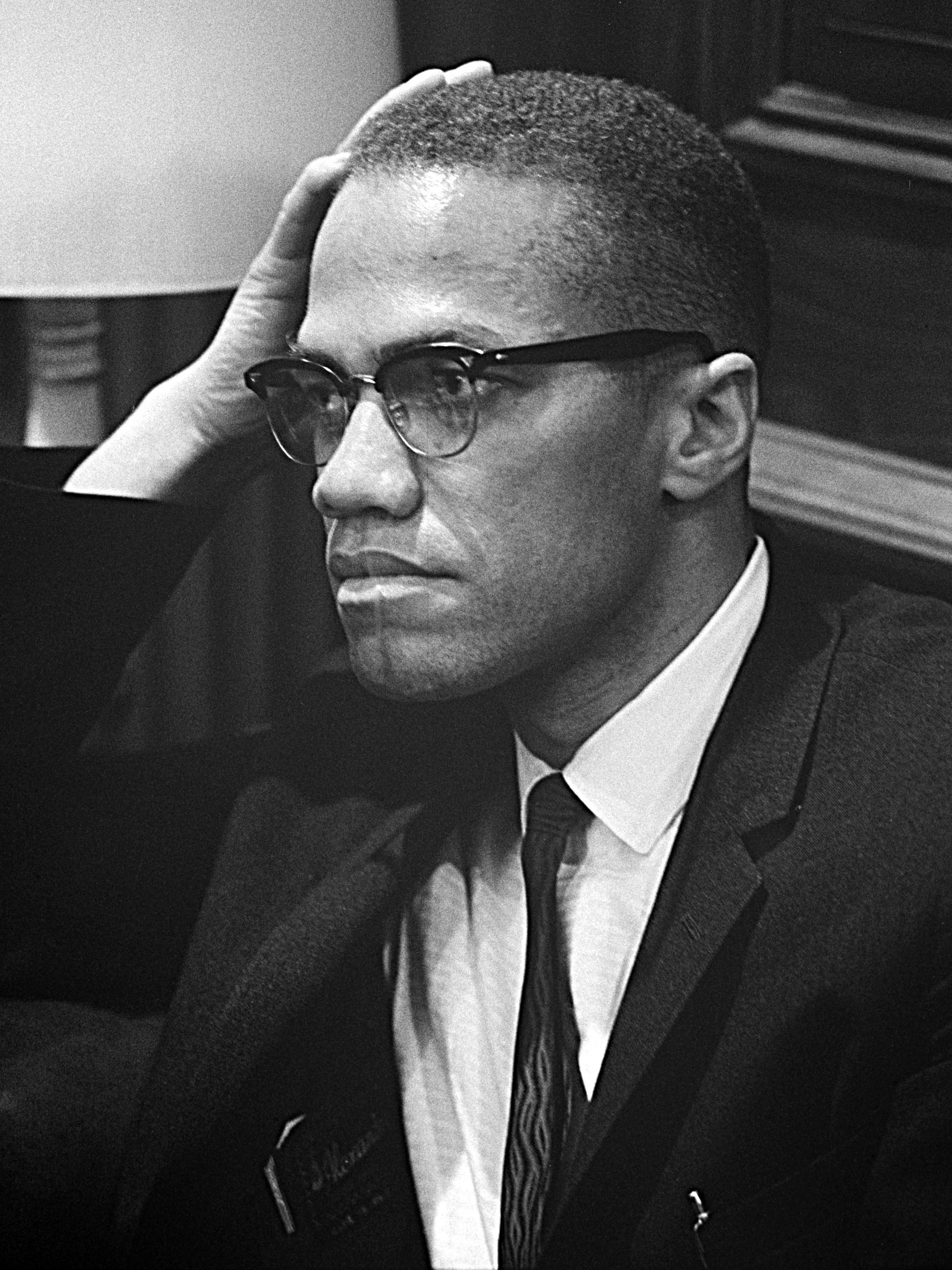
There's currently a 'comment' up on the BBC web site simply saying the teaching of slavery should not be compulsory, made by Vic, UK. Hmmm. Should pupils learn the concept of equality? Are people of African descent equal to people of European descent? Should pupils learn that everyone should be judged by the content of their character and not by the colour of their skin? (I am assuming the answer is an unwavering 'yes', there). By making slavery compulsory it makes the civil rights movement easier to contextualise -- I find it hard to believe I read King's speech and discussed it in class without taking slavery and the slave trade into account whatsoever. The philosophy of Malcolm X is so misunderstood in high school history that schools won't touch it with a barge pole. On face value it's an angry black man shouting "the white man is the devil!" He shouts the white man is the devil because the white man enslaved the black man for three hundred years, and even though Lincoln "freed" the slaves in 1865, African-Americans were still not free when he (Malcolm X) was assassinated and were still second-class citizens then, 100 years after "freedom". Those who forget the past are condemned to repeat it.

The election of Barack Obama to the White House will not put an end to racial prejudice, in the same way that racial prejudice did not begin with the slave trade. But the picture is a complex one: racial prejudice, the political career of Barack Obama, and the slave trade are all carefully interwoven. You can't learn about two of them without the third one. In between these three, of course, there are many more important factors which also cannot be ignored...

Yours, wherever you may be,
Daniel C. Wright

Friday, March 07, 2008

The Meaning of Whiteness and Immigration

As the BBC prepares to air a series of television programmes concerned with the supposed alienation of the white working class, a definition of whiteness and what it is to be white in Britain in the 21st century will emerge. Judging by last night's farcical debate on Newsnight, the satisfaction of such a definition is likely to be debatable.

It is not my intention to define whiteness in Britain in the 21st century just yet; for the moment, I'll leave that to more established scholars, academics, commentators &c. to grapple with, before offering my opinion. Prior to my hearing about the BBC's forthcoming programmes on whiteness, I submitted a features article to my newspaper (scheduled to be published this coming Monday (March 10 2008)) with regard to immigration, under the title "The Linguistics Barrier of Immigration: Breaking Social Segregation Along Lines of Language". For the benefit of persons who are not students in Liverpool, and don't have access to a hard copy of LX News, the article, which I consider to be more of an editorial, is reproduced here. As usual, all comments are welcome:

The issue of immigration into the U.K. is constantly on-going. It seems every other week the government is announcing a new initiative to help people who have arrived in the country from less developed nations. Migration into the U.K. from Asia and Africa has been added to in recent years by people entering the country from new European Union member states such as Poland, Romania and Bulgaria.

One of the most noticeable results is a sharp increase in the number of languages now spoken here. In towns and cities across the U.K. languages as diverse as Tamil, Hindi, Cantonese and Telugu (how many native British people have even heard of that last one?) are regularly spoken amongst the various ethnic groups. Somewhat worryingly, it is estimated that 70% of people living in Britain speak English monolingually. With so many other languages comprising the other 30%, the inevitable consequence is social segregation along lines of language.

Change is necessary. There has to be a sharp linguistic shift in coming years, otherwise the small communities currently being forced -- by linguistic barriers -- to keep themselves to themselves will be isolated. The growth of completely separate societies in British cities is simply not compatible with national unity. A national identity cannot be forged in this way.

The national media constantly stresses what it is to be British. The traditional definition is no longer a viable one. I personally doubt that it ever was. One of the first things people point to is the language. The “to be British is to speak English” mentality is a naïve one at best. It negates the marginal languages of Cornish, Gaelic, Irish and Welsh, even though the people who speak these languages (monolingually or otherwise) are accepted as being “British”.

The cultural benefits of having people from different parts of the world living in the U.K. do not, hopefully, need to be explained. Their varying customs and traditions all contribute to what it is to be British in the 21st century. Furthermore, they compliment the Anglo Saxon customs which have existed here for many centuries, and make Britain a richer place to live.

For the full cultural benefits to be reaped, however, the linguistic barriers which are currently in place need to be broken down.

As part of broad citizenship tests, the government announced last month that the testing of migrants’ English language skills would be one of many tests for migrants to “prove their worth”.

At the same time, the availability of English lessons to new migrants is falling. Being able to communicate meaningfully in English is an important skill, but it should not be made compulsory as part of a process to achieve official citizenship status. If English was strongly recommended to new migrants, and benefits were given to migrants who achieved a certain level of ability in English, then socially at least the tension could be eased between communities. By making English compulsory, the government makes it appear that the mother tongue of the migrant, which they have spoken since birth, is not welcome in the U.K. Such unnecessary hostility from the government only heightens tensions and increases the alienation of the communities.

By learning to read and write English, the migrant does not lose anything. The migrant is still able to communicate with people from their country of origin in their original language, but the addition of English means they can participate in activities outside their own community. The English language, it should be remembered, does not replace in any way the original language of the migrant. The migrant can only benefit from learning English, and the benefits are multiplied by the fact that English remains one of the most widely spoken languages in the world.

Many students from abroad who study at U.K. universities usually have either a good or excellent understanding of English when they arrive in Britain. To speak on a general level, the foreign student community is a good example of the possibilities of migrants having knowledge of English in addition to their mother tongue. In lectures and seminars, foreign students more often than not display a brilliant command of the English language, sometimes putting people of Anglo Saxon blood to shame.

Once they are out of that formal situation, though, they often revert to their first language. I spend a lot of time on the lower ground floor of the Aldham Robarts LRC at John Moores University, and it is fascinating to hear students communicate in such an array of languages.

Yet the hypocrisy of the Anglo Saxon mentality scars relations between white British people and immigrants from foreign lands.

There is a general consensus that migrants should learn English if they want to live here for any period of time. Yet in places such as Benidorm, Torremolinos and the Algarve there are large British Ex-patriot communities that thrive in isolation from the rest of the place. You can walk through the streets and see shops marketing “traditional British fish & chips,” and ale houses boasting to be “traditional Great British pubs”. The people who live there are all English. The only language they speak is English. The vast majority usually have only a rudimentary understanding of Spanish or Portuguese, Moreover, if you want to meet a Spanish or Portuguese citizen, then you have to literally take a bus ride to another part of town. The double standard is shocking.

A future national identity rests upon the banishing of the language barrier. Once it has been eradicated, migrants will find it easier to understand “British” customs and the “British” way of life. Whether or not British natives will ever adapt in order to understand the culture of migrants’ homelands remains to be seen.

Yours, wherever you may be,
Daniel C. Wright

Thursday, August 09, 2007

Will Richard Wrights Please Make Themselves Known To Black Boy

This morning BBC Radio Four's Today programme reported that a Reach investigation concluded black boys needed more black role models within their own communities. (Read how the BBC website reported this here.)

What I think is needed is a wider range of people to look up to from a variety of fields. It is okay to have entertainers as role models. The number of rappers who openly glamorise gun crime is very small. Recently, some rappers have even rapped for peace and equality. In Brazil, the only tangible way to escape the slums is to become a professional footballer (football just happens to be enjoyable). Well, in Britain, while a lot of global rappers would like to believe that hip hop is the only way to escape the ghetto, this is not actually the case. Going to school, getting an education and getting a good job is the most viable way to make something of one's life. Role models are needed within the black community to make this appear to be the reality that it is.

Even back in Claude Brown's Harlem, there were local heroes, but they were most usually the biggest hustlers and the guys who could stake a viable claim to have killed the most men and had sex with the most women. But it is worth remembering that the places in question are Moss Side, Brixton &c. in the 21st Century and not Harlem in the 1930's. But the example of Claude Brown is an important one to bare in mind. The fact that he emphasised that crime was the only way out of poverty is a paradox because he made a success of his life through writing.

For the black middle classes to become more involved at a local level, I think the first step has to be taken on a national level with regard to this issue. People like Benjamin Zephaniah must first make themselves known nationally, then maybe something might happen at local levels in black communities throughout Britain.

As the authorities would like to believe:
There's a big town 'cross the whiskey line
And if we turn the right cards up
They make us boss the devil pays off
And them folks that are real hard up
They get their local hero
Somebody with the right style
They get their local hero
Somebody with just the right smile

(c) Bruce Springsteen (ASCAP)

Yours, wherever you may be,
Daniel C. Wright.

Friday, July 06, 2007

Some Thoughts on Equality, Truth, and the Car Bombs in Britain

Dr. W.E.B. Du Bois devoted his entire life to establishing one notion: the notion of Truth. Only once the Truth is laid bare for all to see, can there be equality and any hope of freedom. The ignorant may still try and tarnish the truth through their continuing believing in old and dated lies, but the truth will still be set free.

Here follows some truth. Persons arrested regarding the two unexploded bombs in London, found this time last week (June 29, 2007), and the flaming jeep sat in the doors of Glasgow's terminal 1 building the day after, were of Asian origin. [Former] friends gave details of their lives to news agencies, and it became clear they were Muslims. This is all Truth.

But this is all Truth as well: these people were extremist believers in the Muslim faith.Their beliefs are not typical of every Muslim. The Muslim Council of Great Britain knows this, rational thinking people of all faiths and creeds realise this, and yet there is animosity towards Muslims in British communities.

In 1897, Dr. Du Bois established that, in Philadelphia, the African-American community around Philadelphia's Seventh Ward, was, indeed, in no way monolithic. He determined that, within the black community, there was racialised stratification. Why is it that, now, in 2007, many Caucasian people are unable to realise that the same is certainly true of the modern Muslim community in Britain. What will it take for such a Truth to be realised? How long before such a Truth is universally accepted in what would a momentous forward step? For too long, decent respectable Muslims have been tarred with the same brush as those who plot to blow up trains and cause mass panic.


Yours, wherever you may be,
Daniel C. Wright

Thursday, May 10, 2007

Transcript of the Speech of the Rt. Hon. Tony Blair, MP

Trimdon Labour Club, Sedgefield

Monday 10 May 2007

It's a great privilege to be here with you again today and to thank all of you too for such a wonderful and warm welcome.

I'd just like to say also if I might and just a special word of thanks to John Burton. John has been my agent here for many years now. He's still the best political adviser that I've got. He's...he's all the years I've known him he's been steadfast in his loyalty to me, to the Labour Party and to Sunderland Football Club, not necessarily in that order.

You know it's been my great good fortune at certain points in my life to meet exceptional people and he is one very exceptional person. And also if I may refer to another exceptional person who's my wife, friend and partner, Cherie.

And the children of course. Euan and Nicky and Katherine and Leo who make me never forget my failings...but give me great love and support.

So, I've come back here to Sedgefield, to my constituency, where my political journey began and where it's fitting that it should end. Today I announce my decision to stand down from the leadership of the Labour Party. The party will now select a new leader. On the 27th June I will tender my resignation from the office of Prime Minister to the Queen.

I've been Prime Minister of this country for just over 10 years. In this job, in the world of today, I think that's long enough, for me, but more especially for the country. And sometimes the only way you conquer the pool of power is to set it down.

I can only describe what I think has been done over these last ten years and perhaps more important why I tried to do it, and I never quite put it in this way before. I was born almost a decade after the Second World War. I was a young man in the social revolution of the 60s and the 70s. I reached political maturity as the cold war was ending and the world was going through a political and an economic and a technological revolution. And I looked at my own country. A great country with a great history and magnificent traditions, proud of its past. But strangely uncertain of its future. Uncertain about the future, almost old fashioned.

And all that was curiously symbolised you know in the politics of the time. You, you had choices, you stood for individual aspiration and getting on in life, or a social compassion of helping others. You were liberal in your values, or conservative. You believed in the power of the state or the efforts of the individual. Spending more money on the public realm was the answer, or it was the problem. And none of it made sense to me. It was twentieth century ideology in a world approaching a new millennium.

Of course people want the best for themselves and their families, but in an age when human capital is a nation's greatest asset, they also know it's just and sensible to extend opportunities, to develop the potential to succeed for all our people not just an elite at the top. And people today are open minded about race and sexuality. They're averse to prejudice. And yet deeply, rightly, conservative with a small 'c' when it comes to good manners, respect for others, treating people courteously.

They acknowledge the need for the state and the responsibility of the individual. And they know spending money on our public services matters and they know it's not enough. How they are run and organised matters too.

So 1997 was a moment for a new beginning. The sweeping away of all the detritus of the past. And expectations were so high. Too high probably. Too high in a way for either of us. And now in 2007 you could easily point to the challenges or these things that are wrong or the grievances that fester.

But go back to 1997. Think back, no really think back. Think about your own living standards then in May 1997 and now. Visit your local school - any of them round here or anywhere in modern Britain. Ask when you last had to wait a year or more on a hospital waiting list or heard of pensioners freezing to death in the winter unable to heat their homes.

There is only one government since 1945 that can say all of the following: more jobs, fewer unemployed, better health and education results, lower crime and economic growth in every quarter. Only one government. This one .

But we don't need statistics. There's something bigger than what can be measured in waiting lists or GCSE results or the latest crime or jobs figures. Look at the British economy: at ease with globalisation. London, the world's financial centre. Visit ou8r great cities in this country and compare them with 10 years ago. No country attracts overseas investment like we do.
And think about the culture in Britain in the year 2007. I don't just mean our arts that are thriving - I mean our values. The minimum wage. Paid holidays as a right. Amongst the best maternity pay and leave today in Europe. Equality for gay people.

Or look at the debates that reverberate around the word today - the global movement to support Africa in its struggle against poverty. Climate change, then fight against terrorism. Britain is not a follower today - Britain is a leader.

It gets the essential characteristic of today's world. It's interdependent. This is a country today that fort all its faults, form all the myriad of unresolved problems and fresh challenges, it is a country comfortable in the twenty-first century. At home in its own skin, able not just to be proud of its past but also confident of its future. You know I don't think Northern Ireland would have been changed unless Britain had changed. Or the Olympics won if we were still the Britain of 1997.

And as for my own leadership, throughout these ten years where the predictable has competed with the utterly unpredicted, right at the outset one thing was clear to me. Without the Labour Party allowing me to lead it nothing could ever have been done. But I also knew my duty was to put the country first. That much was obvious to me when just under 13 years ago I became Labour's Leader.

What I had to learn, however, as Prime Minister was what putting the country first really meant. Decision-making is hard. You know everyone always says in politics: listen to the people. And the trouble is they don't always agree.

When you are in Opposition, you meet this group and they say 'why can't you do this?' And you say: 'it's really a good question. Thank you'. And they go away and say: 'it's great, he really listened'. And then you meet that other group and they say: 'why can't you do that?' And you say: 'it's a really good question. Thank you'. And they go away happy that you listened.

In Government you have to give the answer, not an answer, the answer. And, in time, you realise that putting the country first doesn't mean doing the right thing according to conventional wisdom or the prevailing consensus or the latest snapshot of opinion. It means doing what you genuinely believe to be right; that your duty as prime minister is to act according to your conviction. And all of that can get contorted so that people think that you act according to some messianic zeal. Doubt, hesitation, reflection, consideration, reconsideration; these are all the good companions of proper decision-making but the ultimate obligation is to decide.

And sometimes the decisions are accepted quite quickly; Bank of England independence was one, which gave us our economic stability. Sometimes, like tuition fees or trying to break up old, monolithic public services, the changes are deeply controversial, hellish, hard to do. But you can see we're moving with the grain of change around the world. And sometimes, like with Europe, where I believe Britain should keep its position strong, you know you are fighting opinion but you're kind of content in doing so. And sometimes, as with the completely unexpected, you are alone with your own instinct.

In Sierra Leone and to stop ethnic cleansing in Kosovo I took the decision to make our country one that intervened, that did not pass by or keep out of the thick of it. And then came the utterly unanticipated and dramatic September the 11th 2001 and the death of 3000 or more on the streets on New York. And I decided we should stand shoulder-to-shoulder with our oldest ally and I did so out of belief. And so Afghanistan and then Iraq, the latter bitterly controversial. And removing Saddam and his sons from power, as with removing the Taliban, was over with relative ease, but the blowback since from global terrorism and those elements that support it has been fierce and unrelenting and costly. And for many it simply isn't and can't be worth it. For me, I think we must see it through. They the terrorists who threaten us here and around the world will never give up if we give up. It is a test of will and of belief. And we can't fail it.
So: some things I knew I would be dealing with. Some I thought I might be. Some never occurred to me, or to you, on that morning of 2 May 1997 when I came into Downing Street for the first time.

Great expectations not fulfilled in every part, for sure. Occasionally people say, as I said earlier, the expectations were too high, you should have lowered them. But, to be frank, I would not have wanted it any other way. I was, and remain, as a person and as a Prime Minister an optimist. Politics may be the art of the possible; but at least in life, give the impossible a go.
So of course the visions are painted in the colours of the rainbow; and the reality is sketched in the duller tones of black, white and grey.

But I ask you to accept one thing. Hand on heart, I did what I thought was right. I may have been wrong, that's your call. But believe one thing, if nothing else. I did what I thought was right for our country. And I came into office with high hopes for Britain's future and, you know, I leave it with even higher hopes for Britain's future. This is a country that can today be excited by the opportunities, not constantly fretful of the dangers.

And people say to me it's a tough job, not really. A tough life is the life led by the young, severely disabled children and their parents who visited me in Parliament the other week. Tough is the life my Dad had; his whole career cut short at the age of 40 by a stroke.

Actually, I've been very lucky and very blessed and this country is a blessed nation. The British are special. The world knows it; in our innermost thoughts we know it. This is the greatest nation on Earth.

So it has been an honour to serve it. I give my thanks to you the British people for the times that I have succeeded and my apologies to you for the times I've fallen short.

But good luck.
Friday, February 16, 2007

Poverty Is A Poor Excuse For Violence

Poverty in Great Britain is not the same as poverty on a global scale. Relative poverty is not that bad: houses and flats in Peckham, Clapham, and South London, though not luxurious, are habitable. Regeneration is needed in these areas, but only because of the wealth of the surrounding areas. These areas are made to stand out because of the prosperity of the areas around them.

Turning to crime or gang/gun violence is the easy option for the youth who grow up these deprived areas. What is needed is to make the youth of these areas see that there are other options, and that turning to criminal activities (though the easiest option) is not the most sensible choice. Lashing out at the world because "my Dad left my Mum" or because "I never knew my Dad" is simply not acceptable. The conventional viewpoint maintains that a breakdown in the family structure results in the child becoming violent. This is not necessarily so!

July, 1981. Merseyside is gripped by fear as hundreds of black youths riot in Toxteth. For nine days, they burn down shops, attack innocent passers-by and fight with the police. More than 1,000 officers are injured as they battled against petrol bombs and paving stones.

In 1981, Toxteth was the most poverty-ridden area of Liverpool. It still is. It also happens to be 'the Black area' of Liverpool. Although it is still a rundown area, a lot has changed since the riots of 1981. The changes concern education. Educational initiatives have sprung up all over Liverpool, including the regeneration of Liverpool Community College, the creation of Toxteth TV, and more coloured students than ever before attending Liverpool John Moores University. Education is the key. Education is not impossible in poverty-scarred areas. It does not cost anything to read a book.

(It is perhaps necessary to address the notion of the ghetto at this point. There was in 1981, as there still is now, a desire to see these areas turned into fully-blown ghettos, where the gang leaders have the final say on issues of justice, what is right and wrong &c. in an area which is no longer policed by the authorities.)

What is described above is the hard option. After 1981, many of Toxteth's youth turned their back on violence for equality. They turned their back on the easy option of self-pitying drug dealing and gun crime. Toxteth is an example which should be learned from by those in Peckham and Clapham.

Hip hop needs to be looked at objectively. It is true that most rappers are rags-to-riches stories through this black artform, but their childhoods really were in ghettos. The inner city areas of Nottingham, Toxteth in Liverpool, Peckham in London -- these areas are not as bad as Compton, CA., or South Central Los Angeles, CA. We should be thankful Britain is not that bad. Rap has good qualities. It encourages black empowerment. My advice would be to take the energy from hip hop but shed the violence; use the energy constructively to assert oneself academically, and escape those who are less well educated -- escape those who are the violent ones.

Some take hip hop literally. This is illustrated by all the recent shootings in Peckham. The media suspects links to gang culture. They are probably right. But if Booker T. Washington can go from being born a slave to being one of Americas foremost black representatives in an era of strong white assertion, why can not the Peckham gang members go get a proper education, a decent job and a good family life in what is an era of racial equality relative to Booker T. Washington's day?

I'm not saying every Black Briton should adopt Booker T. Washington's conservative views; I am saying every Black Briton should do like he did so they can better assert liberal pro-black viewpoints and make a difference to the wider community (as well as make the community a richer one), rather than just going around killing each other in violence shrouded behind a veil of poverty.

Yours, wherever you may be,
Daniel C. Wright

Thursday, February 15, 2007

The Scramble For News Is Getting Easier

I went onto Google this morning and decided to make a personalised home page. I created two tabs: one called news, the other called sport.

On the news tab, I tried to put as wider ranging content as I possibly could, in terms of covering as much of the planet as possible. It wasn't hard.

On this blog, three elements to world news are easily accessible down the left hand side: the purely Western viewpoint is supplied by the Washington Post; the BBC gives the moderate, impartial, Western stance; and Al Jazeera supplies the experienced coverage of the Middle East / Arabic world so lacking in Western news coverage.

Being "in the know" has always been a primal desire of Man. Back in the dawn of civilisation, Man did not need to know on a day-to-day basis what was going on, other than what immediately effected his dwelling and his source of food.

By the start of the last century, the newspaper (certainly in Great Britain and the United States) was king when it came to supplying news to the people. Since then, the mastheads of seemingly well established publications (the New York Herald, the Morning Herald &c.) have disappeared from newsstands, never to be seen again.

Television news soon came in, not long after radio broadcasts (from the Home Service here in Britain) meant citizens no longer had to wait for the next days paper to find out about world affairs. News reels meant citizens could visually comprehend the news. It became more real. Television news could soon be watched in the comfort of the living room, and at set times: 12:00, 18:00 and either 21:00 or 22:00.

But people still had to wait. The development of multi-channel television brought with it twenty-four hour news, whenever people wanted it. Not only was news now on-demand, but it was global. Fox News -- in the United Kingdom! BBC News 24 -- wherever you may be! Al Jazeera -- outside the Muslim sphere! And recently, Russia Today -- in English!

But the news was still mediated. The controller still decided what we saw and what we heard about. And to a certain extent, this still exists with the Internet, but to a lesser extent. The newspapers have gone 'digital'. They had to, or cease to exist. The editor is still in control, but the consumer has a choice of news sources like never before. A choice which can never matched by television. A choice which finally balances out the regulation of news sources.

This choice is compounded by what I am doing now. People can comment and have their say on topical issues. The comment page of the [London] Times still has a certain aura, a certain dignified respect, but now the ordinary citizen can write on his or her blog, can e-mail the websites and can text the twenty-four hour news channels.

Exactly how useful some of the content on the Internet is, is debatable. Mindless ranting on one blog about the turmoil in the Middle East is far less useful than the letter written to the editor of the Daily Telegraph by an aid worker who has spent 25 years in the Gaza Strip. But the ranting blog is still valuable; at least that person is actively thinking about current affairs issues and taking an interest.

There are more and more websites which let you choose your own content. The content you can choose usually repeats itself from site to site: The Washington Post, The NY Times, The BBC, Sky News, The Sydney Morning Herald, USA Today, La Gazetta Dello Sport, &c. &c. But this is good. It is easy for citizens to grow accustomed to a publication which originated on the other side of the world. I, for example, can now scan every major news publication in the world in seconds. I have greater freedom in what I read, and when.

And what also makes me smile is the fact that the full impact of the Internet is still yet to be felt. The Internet is a massive tool for democracy. The Internet makes segregated dictatorships unworkable in the twenty-first century. The Internet brings freedom to the most closed-off countries in the world.

Yours, wherever you may be,
Daniel C. Wright

Wednesday, February 07, 2007

Successes Happen Too!

I've just finished watching a programme on Channel Four which followed a young black women in London setting up a business of her own. She opened an Internet cafe where people could come and record music in the attached studio for so much an hour. At first, business was slow: the problem being that no one knew about the shop, and there was no Internet connection. After calling in technical support, she recorded an advert for radio and soon business was booming, as they say. By the end of the programme, she was talking of opening up other similar shops across London.

After feeling compelled to write something about Fergal Keane's chapter on the Rwandan genocide last night, it feels good to be able to write about someones success. Without realising it, the lady had made a stand for black Britain. With the help of her father, she was able to promote a genre of music which is a soundtrack to coloured people's lives in Britain. Urban Britain is a more colourful place (no pun intended) thanks to the artistic and creative minds of ethnic minorities, able to assert themselves on a national level through their artistic endeavours. Hip hop, RnB, dancehall, reggae &c. give black people in Britain an identity. If they have an identity, they become visible to the national consciousness. Such an identity won't stop racism, but it will make speaking out against racist behaviour easier, and racism will be tolerated less.

The success of black women in Britain makes our society better.

Yours, wherever you may be,
Daniel C. Wright