Oxford English Dictionary

Showing posts with label BBC. Show all posts

Thursday, August 28, 2008

So The Time Has Come

The BBC reports this week that, from the beginning of the 2008 / 09 academic year, Britain's involvement in the slave trade is to be studied by all secondary pupils in England.

When I began university, I studied a core module in the first year called "Black Atlantic: Slavery and it's Legacies". The title, you may notice, is related to a book by Paul Gilroy, but that's not the point. I came out of the first lecture scared. I was not scared by the horrors of slavery (I guess the MTV generation has become passive to images and tales of gore and suffering), but what troubled me personally was that I had gone through my entire childhood without realising that Britain -- the country of which I had always considered myself but a loyal servant -- committed one of the most terrible crimes of modern civilisation. I knew of the Holocaust, which accounted for the deaths of millions of people because of their religion, but I knew not of fates worse than death bore out by African people over timescales of centuries instead of decades. I felt ignorant and out of touch with a passage of history so gruesome and wrong that I simply began to crave knowledge and understanding on a phenomenal and bewildering scale.

What hurt the most was the sudden realisation that slavery and the slave trade mattered. They mattered as early as the sixteenth century, and they still matter here in the twenty-first.

I studied my degree at the University of Liverpool John Moores: the streets I walked down to get to class were, and still are, named after the slave traders. Under the picture on the BBC web site, the caption reads: "pupils will be urged to look at the long term impacts of slavery". While this simply has to be the case if the learning is to be worthwhile, it is worth remembering that the legacies of slavery are not purely aesthetic in terms of the microcosm of Liverpool. As often as raindrops fall upon Liverpool the city tries to cleanse itself, yet it longs for a cleanliness which seems to forever be out of reach, as the raindrops come laced with the blood of the slaves. The same is true of Bristol. The same is true of London.

The only time I ever came close to touching upon the slave trade was in the sixth form at school, when I was studying A-level government & politics. We learnt of about thirty Supreme Court cases in a single one hour lesson. Dred Scott vs Sandford, 1857 passed by in a single sentence: "no slave could be a citizen of the United States" said the teacher. "Next one, Plessy vs Ferguson, 1897," he continued, "the legalisation of segregation in America. This was overturned in the 50's with the case Brown vs Board of Education." In about thirty seconds we covered the spine of African-American history with regard to the U.S. Supreme Court. I can't recall them being mentioned again in class, but I still remember thinking at the time: "slaves? Segregation? There's no connection there." Thankfully I did my reading and I did my research. Twelve months later, in my first year at university.

Until now, the neglect of the slave trade and slavery from the curriculum sticks out like a sore thumb. To not teach the slave trade and slavery and the legacies of both is to effectively deny that they happened.

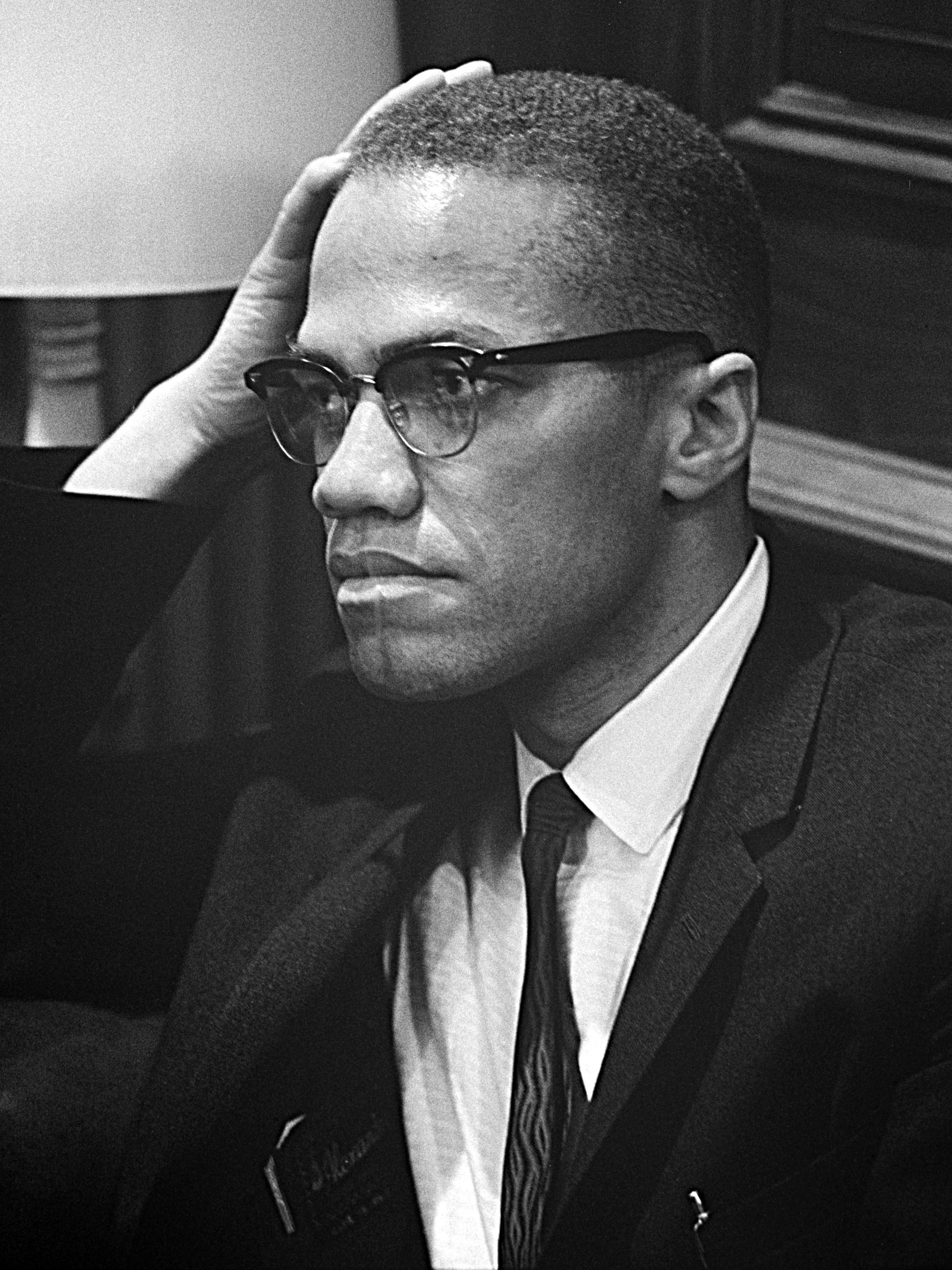
There's currently a 'comment' up on the BBC web site simply saying the teaching of slavery should not be compulsory, made by Vic, UK. Hmmm. Should pupils learn the concept of equality? Are people of African descent equal to people of European descent? Should pupils learn that everyone should be judged by the content of their character and not by the colour of their skin? (I am assuming the answer is an unwavering 'yes', there). By making slavery compulsory it makes the civil rights movement easier to contextualise -- I find it hard to believe I read King's speech and discussed it in class without taking slavery and the slave trade into account whatsoever. The philosophy of Malcolm X is so misunderstood in high school history that schools won't touch it with a barge pole. On face value it's an angry black man shouting "the white man is the devil!" He shouts the white man is the devil because the white man enslaved the black man for three hundred years, and even though Lincoln "freed" the slaves in 1865, African-Americans were still not free when he (Malcolm X) was assassinated and were still second-class citizens then, 100 years after "freedom". Those who forget the past are condemned to repeat it.

The election of Barack Obama to the White House will not put an end to racial prejudice, in the same way that racial prejudice did not begin with the slave trade. But the picture is a complex one: racial prejudice, the political career of Barack Obama, and the slave trade are all carefully interwoven. You can't learn about two of them without the third one. In between these three, of course, there are many more important factors which also cannot be ignored...

Yours, wherever you may be,
Daniel C. Wright
Thursday, August 09, 2007

Will Richard Wrights Please Make Themselves Known To Black Boy

This morning BBC Radio Four's Today programme reported that a Reach investigation concluded black boys needed more black role models within their own communities. (Read how the BBC website reported this here.)

What I think is needed is a wider range of people to look up to from a variety of fields. It is okay to have entertainers as role models. The number of rappers who openly glamorise gun crime is very small. Recently, some rappers have even rapped for peace and equality. In Brazil, the only tangible way to escape the slums is to become a professional footballer (football just happens to be enjoyable). Well, in Britain, while a lot of global rappers would like to believe that hip hop is the only way to escape the ghetto, this is not actually the case. Going to school, getting an education and getting a good job is the most viable way to make something of one's life. Role models are needed within the black community to make this appear to be the reality that it is.

Even back in Claude Brown's Harlem, there were local heroes, but they were most usually the biggest hustlers and the guys who could stake a viable claim to have killed the most men and had sex with the most women. But it is worth remembering that the places in question are Moss Side, Brixton &c. in the 21st Century and not Harlem in the 1930's. But the example of Claude Brown is an important one to bare in mind. The fact that he emphasised that crime was the only way out of poverty is a paradox because he made a success of his life through writing.

For the black middle classes to become more involved at a local level, I think the first step has to be taken on a national level with regard to this issue. People like Benjamin Zephaniah must first make themselves known nationally, then maybe something might happen at local levels in black communities throughout Britain.

As the authorities would like to believe:
There's a big town 'cross the whiskey line
And if we turn the right cards up
They make us boss the devil pays off
And them folks that are real hard up
They get their local hero
Somebody with the right style
They get their local hero
Somebody with just the right smile

(c) Bruce Springsteen (ASCAP)

Yours, wherever you may be,
Daniel C. Wright.

Saturday, May 19, 2007

Dubai Ruler In Vast Charity Gift

I came across this story on the BBC as well as the other dominant news agencies:

"The ruler of Dubai, Sheikh Mohammed bin Rashid al-Maktoum, says he is giving $10bn ($5bn) to set up an educational foundation in the Middle East.

The money is meant to improve the standard of education and research in the region, and aims to stimulate job creation, Sheikh Mohammed said.

It is thought to be one of the largest charitable donations in history.

The announcement was made to widespread applause at the World Economic Forum, which is being held in Jordan.

Sheikh Mohammed, known as a successful racehorse owner as well as ruler of Dubai, said his personal initiative was aimed at creating what he called "a knowledge-based society" in the Middle East.

At the moment, he explained, there was high illiteracy in the region - where more than 40% of Arab women cannot read or write.

The whole Arab world publishes fewer books than the country of Turkey.

And spending on scientific research is only a tiny fraction of that in developed countries.

"There is a wide knowledge gap between us and the developed world in the West and in Asia. Our only choice is to bridge this gap as quickly as possible, because our age is defined by knowledge," the sheikh said.

While there may be less learning in the region, there is high unemployment, and it is likely to get higher with a rapidly growing population.

"Our region needs at this moment 15 million job opportunities, and our Arab world will need in the next 20 years between 74 to 85 million job opportunities," the sheikh told the conference.
"We need to develop the infrastructure so we can create jobs."


Sheikh Mohammed hopes to increase education and research, and also to encourage innovation and entrepreneurship throughout the region.

"In order to realise these objectives, I have decided to establish the Mohammed bin Rashid al-Maktoum Foundation to focus on human development, and have I decided to endow a fund of $10bn to finance its projects," he said.

As ruler of Dubai, he can share the success of his principality, which is known the world over as the economic success story of the Middle East."

From a personal philanthropic point-of-view, it's nice to see top politicians pin pointing education as a fundamental concern for the general uplift of society. I know of people who would argue that simply throwing money at the situation is unlikely to solve anything, and that pouring money into the problem is a Western (thus capitalist) solution to an Eastern problem. I, however, disagree. I think Sheikh Mohammad's money will have a big impact on illiteracy, for example, and I think his generous donation will also draw attention to the problem.

Yours, wherever you may be,
Daniel C. Wright.

Thursday, February 15, 2007

The Scramble For News Is Getting Easier

I went onto Google this morning and decided to make a personalised home page. I created two tabs: one called news, the other called sport.

On the news tab, I tried to put as wider ranging content as I possibly could, in terms of covering as much of the planet as possible. It wasn't hard.

On this blog, three elements to world news are easily accessible down the left hand side: the purely Western viewpoint is supplied by the Washington Post; the BBC gives the moderate, impartial, Western stance; and Al Jazeera supplies the experienced coverage of the Middle East / Arabic world so lacking in Western news coverage.

Being "in the know" has always been a primal desire of Man. Back in the dawn of civilisation, Man did not need to know on a day-to-day basis what was going on, other than what immediately effected his dwelling and his source of food.

By the start of the last century, the newspaper (certainly in Great Britain and the United States) was king when it came to supplying news to the people. Since then, the mastheads of seemingly well established publications (the New York Herald, the Morning Herald &c.) have disappeared from newsstands, never to be seen again.

Television news soon came in, not long after radio broadcasts (from the Home Service here in Britain) meant citizens no longer had to wait for the next days paper to find out about world affairs. News reels meant citizens could visually comprehend the news. It became more real. Television news could soon be watched in the comfort of the living room, and at set times: 12:00, 18:00 and either 21:00 or 22:00.

But people still had to wait. The development of multi-channel television brought with it twenty-four hour news, whenever people wanted it. Not only was news now on-demand, but it was global. Fox News -- in the United Kingdom! BBC News 24 -- wherever you may be! Al Jazeera -- outside the Muslim sphere! And recently, Russia Today -- in English!

But the news was still mediated. The controller still decided what we saw and what we heard about. And to a certain extent, this still exists with the Internet, but to a lesser extent. The newspapers have gone 'digital'. They had to, or cease to exist. The editor is still in control, but the consumer has a choice of news sources like never before. A choice which can never matched by television. A choice which finally balances out the regulation of news sources.

This choice is compounded by what I am doing now. People can comment and have their say on topical issues. The comment page of the [London] Times still has a certain aura, a certain dignified respect, but now the ordinary citizen can write on his or her blog, can e-mail the websites and can text the twenty-four hour news channels.

Exactly how useful some of the content on the Internet is, is debatable. Mindless ranting on one blog about the turmoil in the Middle East is far less useful than the letter written to the editor of the Daily Telegraph by an aid worker who has spent 25 years in the Gaza Strip. But the ranting blog is still valuable; at least that person is actively thinking about current affairs issues and taking an interest.

There are more and more websites which let you choose your own content. The content you can choose usually repeats itself from site to site: The Washington Post, The NY Times, The BBC, Sky News, The Sydney Morning Herald, USA Today, La Gazetta Dello Sport, &c. &c. But this is good. It is easy for citizens to grow accustomed to a publication which originated on the other side of the world. I, for example, can now scan every major news publication in the world in seconds. I have greater freedom in what I read, and when.

And what also makes me smile is the fact that the full impact of the Internet is still yet to be felt. The Internet is a massive tool for democracy. The Internet makes segregated dictatorships unworkable in the twenty-first century. The Internet brings freedom to the most closed-off countries in the world.

Yours, wherever you may be,
Daniel C. Wright