Last year the England and Wales Cricket Board (ECB) made the bold but wrong decision to stage the opening Test of the 2009 Ashes series at Sophia Gardens, Cardiff. For those who don't realise it, that means England will be playing Australia in Wales.
This is supposed to be a home Ashes series for England. Cardiff is certainly neutral, regardless of what the ECB is called.
The ground which would have almost certainly hosted this match if money couldn't talk would be Old Trafford, Manchester. Old Trafford is the fastest, bounciest track in the country. The England team like playing there, and the opposition almost always struggle there. England very nearly beat Australia there in 2005, falling just one wicket short of a sensational victory. Ponting showed his utter class, batting for most of the fifth day on a wearing, turning, seaming track to save the game for the visitors. I myself was one of the 10,000 fans locked out on the morning on the fifth day. Twelve months later I was there again (in the stadium, this time) to see England wrap up an excellent Pakistan team (lead by the formidable Inzi) in effectively three days. The batsman from the subcontinent just couldn't handle the pace and bounce of the Old Trafford Test track; they couldn't get onto the front foot and they couldn't hook, pull or cut the England seamers off the back foot. The England batsman showed them how it was done and the hosts won at a canter. And England won't be playing there in 2009. Absolute madness.
The history of Test cricket at Old Trafford obviously goes back considerably further than that. I've not even mentioned Warne's magic ball and Laker's 19 for 90, inc. his ten wicket inning. History tells us England play well at Old Trafford, but they won't be playing the Aussies there in 2009. The ECB's bank balance may well be somewhat inflated by the extra pounds coming in from Sophia Gardens, but there is a very good chance their outfit could be made to look very very foolish next summer -- and on what is undoubtedly the biggest stage of them all.
The main argument for staging a Test in Cardiff is that it is the England & Wales Cricket Board, so there probably should be a Test played in Wales. Okay, fair enough. But you know what? England and Wales are both part of the United Kingdom -- maybe we should have another one of the five Test matches in Edinburgh. And another in Belfast. And, you know, to keep all Ireland happy, maybe we should have another in Dublin. No? Sounds a bit silly to have England playing a home Test against the Aussies in Dublin, Ireland, doesn't it?
At the end of the day, Sophia Gardens (I refuse to call it anything else, by the way) just is not cut out to host such an important Test match. Or any Test match, for that matter. The straight boundaries are 40 yards -- yes, just 40 yards! And this, in an era when cricket is already overly-friendly to batsmen. The ground is too manufactured. There is no special buzz abut it. The stands have blue seating in. Such a small difference makes it feel like a sterile sporting venue rather than a historic cricket ground. It is possible to build cricket grounds to feel like cricket grounds -- look at the Rose Bowl, in Hampshire. If Old Trafford isn't up to hosting an Ashes test in 2009, then why isn't it being played at the Rose Bowl? The wicket was a bit lively when first put down, but it's getting better and better every year and the ground hosted a fabulous Twenty20 finals day.
All in all, this is becoming a very embarrassing episode for the ECB. It was summed up yesterday, when, after just three overs it started to rain, and the ground staff took an absolute age to get the covers on. They were the old push pull covers, not like the hover cover at Old Trafford.
Sophia Gardens Cardiff is not up to the job of hosting an Ashes Test. Below are the thoughts of Andrew Miller, of CricInfo.
The reporter from the South Wales Echo possibly hadn't thought through the implications when, at the end of the rain-wrecked ODI at the newly refurbished Sophia Gardens (or SWALEC Stadium, as it would love to become known), he decided to ask Andrew Flintoff his opinion of the venue that, in just under ten months' time, will host the first Test of the 2009 Ashes.
"It's damp," deadpanned Flintoff, in the most underwhelming endorsement imaginable. Then, sensing he ought to come up with a slightly more upbeat response, Flintoff tried again, but still couldn't muster the necessary enthusiasm. "It's better than last time I came," he said. "It's not Old Trafford, but it's all right."
Admittedly, Flintoff was the wrong man to ask. As a proud Lancastrian, he was duty-bound to be indignant about the manner in which his home ground has been stripped of Ashes status for next summer's seismic contest. And besides, as dress rehearsals go, Cardiff's three-over rain-dodge on Wednesday was never going to set the pulses racing, for players or spectators.
Back in 2005, however, those pulses were working overtime. On the final morning of the third Test, 10,000 fans had to be locked out of Old Trafford, as Ashes fever officially took hold of the nation. Try as one might, it was hard to envisage the same scenes being recreated in the heart of Cardiff next summer, and that wasn't just the weather dampening the enthusiasm. It was the venue's simple lack of familiarity that jarred as well.
Home advantage can be a hard thing to quantify, but by and large it is made up of a series of strands that, when drawn tightly together, create a formidable hurdle for opposition teams to overcome. Contributing factors might include the knowledge of local weather patterns and their impact on pitch conditions, or the feel-good factor that courses through the players as they walk through the gates and recall the glories of matches past. Perhaps there's some quirky feature in the dressing room that can be guaranteed to get under the skin of visiting sides, or maybe that role is reliably performed by the boisterous local support.
Whatever the ingredients, it's hard to imagine a scenario in which Australia would smooth England's path to the Ashes in 2010-11 by scrapping their now-traditional curtain-raiser at Brisbane's "Gabbatoir" in favour of a more neutral venue. Only a complacent, naïve or unthinking board - and probably all three at once - would disregard the sort of backing that England could have counted upon at Old Trafford (and Trent Bridge for that matter) next summer, and trust the opening fixture of such a key series to a ground where England have contested fewer overs of international cricket than seven rival nations, Australia included.
How will the pitch play for England's quartet of seamers? Stuart Broad may have struck twice in the ten overs that England have managed over the course of two matches against Pakistan and South Africa, but we can only really speculate - Glamorgan's struggles at the foot of the second division of the Championship aren't exactly a reliable indicator of form. How will Monty Panesar protect the unsettlingly short and straight boundaries at either end of the ground, 40 yard distances which, as Shaun Pollock was miming in the lift between punditry stints, invite gentle chip shots into the River Taff?
There are too many unknowns for Cardiff to truly be classified as an England "home" Test - and geographically, of course, it is anything but. Notwithstanding the silent "W" in the England & Wales Cricket Board, it is a point of pedantry that swings both ways - Welsh cricket fans bridle whenever Cardiff is mentioned, for convenience's sake, as part of England, and yet those same supporters would doubtless take umbrage if it was suggested that they were any less passionate as a result.
The real problem with the venue, however, is one of perception. Locating Cardiff on a map is one thing, but it's only when you arrive in town that you really appreciate that you've set foot in a rival capital. The little details play their part, in particular the bilingual signposts, but for the keenest sense of trespass, there's nothing quite so forbidding as the towering magnificence of the Millennium Stadium, which is unmissably placed slap-bang in the centre of the city.
With due respect to the SWALEC, this is the only stadium in town - it boasts 76,000 seats compared with a puny 15,000, but, with Land Of Our Fathers being played out on loop over the tannoy, it is also clear that this is a venue where Englishmen tread at their peril. With that in mind, it's not easy to bridge the mental gap that such a monolith creates. English sportsmen do not come to Cardiff to be cheered to the rafters. They come here to be rucked and mauled to oblivion. Anything else is quite frankly a disturbance of the natural order.
Flintoff did not mean to be churlish about Glamorgan's redevelopment. Given the constraints of time, and the need to be sympathetic to its delightful riverside setting, the expansion has been achieved as tastefully and effectively as anyone could have hoped. But how will he and his team-mates feel as they wait in the Ystafell Newid inside the "Really Welsh" pavilion on July 8 next year, while the strains of Jerusalem announce the start of the 2009 Ashes? No more than mildly disorientated, you would hope. Nevertheless, of all the contests to jeopardise in such a way, English cricket really couldn't have picked a less opportune one.
Yours, wherever you may be,
Daniel C. Wright
Thursday, September 04, 2008
Cricket in Cardiff: Just Not Cricket


Monday, September 01, 2008
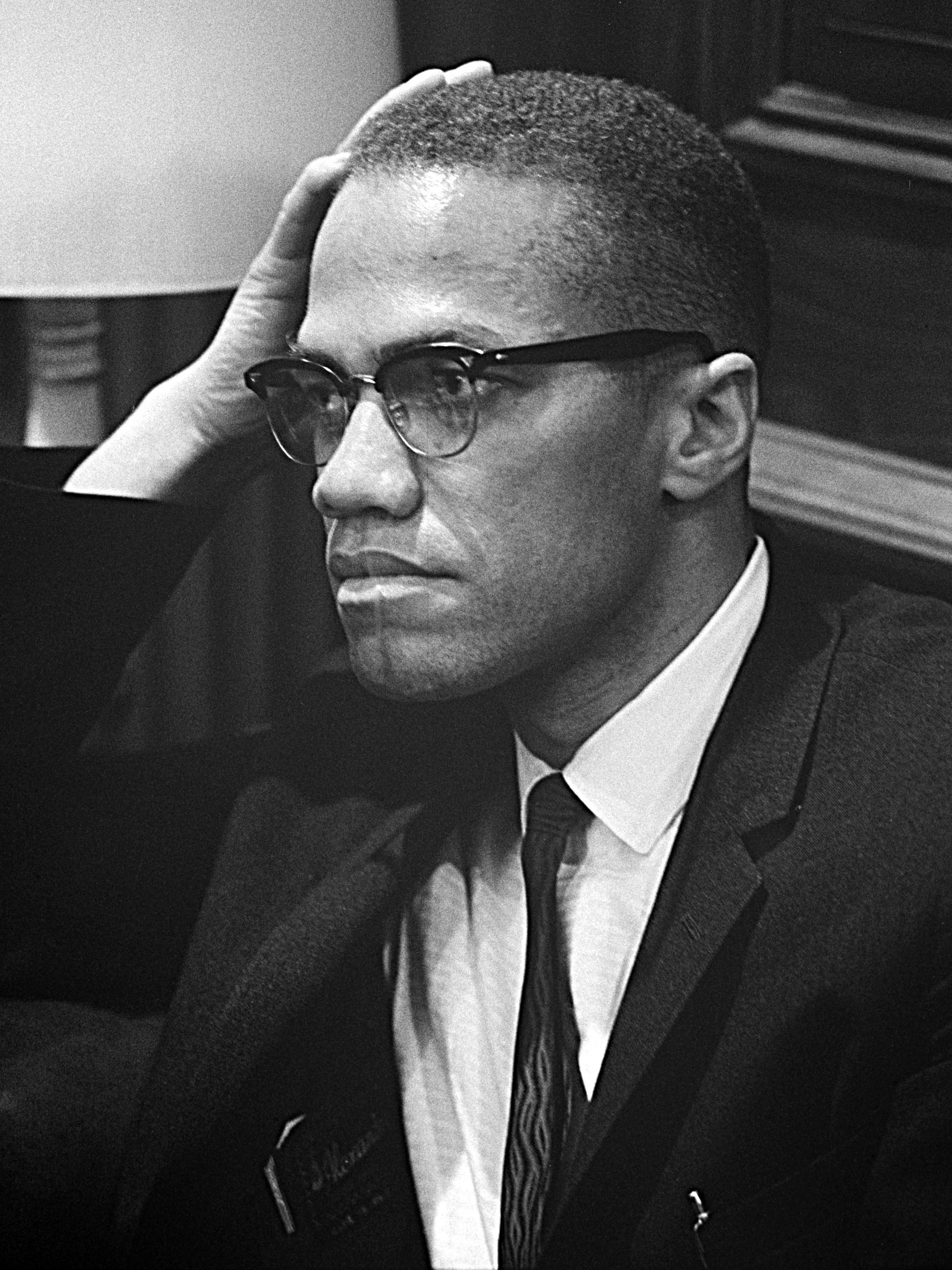
Malcolm X. What Would He Say About Barack?
The question of what Malcolm X would say (both in public and in private) about the political career of Barack Obama is an impossible one to answer. The above video is from 1963 -- a programme called "City Desk" which aired in the Chicago, IL, area. From this, we should deduce two important facts which have already come up and will almost certainly come up again in this current election: the importance and unimportance of a name; and a single symbolic gesture which is effectively untrue.
Thursday, August 28, 2008
So The Time Has Come
The BBC reports this week that, from the beginning of the 2008 / 09 academic year, Britain's involvement in the slave trade is to be studied by all secondary pupils in England.
When I began university, I studied a core module in the first year called "Black Atlantic: Slavery and it's Legacies". The title, you may notice, is related to a book by Paul Gilroy, but that's not the point. I came out of the first lecture scared. I was not scared by the horrors of slavery (I guess the MTV generation has become passive to images and tales of gore and suffering), but what troubled me personally was that I had gone through my entire childhood without realising that Britain -- the country of which I had always considered myself but a loyal servant -- committed one of the most terrible crimes of modern civilisation. I knew of the Holocaust, which accounted for the deaths of millions of people because of their religion, but I knew not of fates worse than death bore out by African people over timescales of centuries instead of decades. I felt ignorant and out of touch with a passage of history so gruesome and wrong that I simply began to crave knowledge and understanding on a phenomenal and bewildering scale.
What hurt the most was the sudden realisation that slavery and the slave trade mattered. They mattered as early as the sixteenth century, and they still matter here in the twenty-first.
I studied my degree at the University of Liverpool John Moores: the streets I walked down to get to class were, and still are, named after the slave traders. Under the picture on the BBC web site, the caption reads: "pupils will be urged to look at the long term impacts of slavery". While this simply has to be the case if the learning is to be worthwhile, it is worth remembering that the legacies of slavery are not purely aesthetic in terms of the microcosm of Liverpool. As often as raindrops fall upon Liverpool the city tries to cleanse itself, yet it longs for a cleanliness which seems to forever be out of reach, as the raindrops come laced with the blood of the slaves. The same is true of Bristol. The same is true of London.
The only time I ever came close to touching upon the slave trade was in the sixth form at school, when I was studying A-level government & politics. We learnt of about thirty Supreme Court cases in a single one hour lesson. Dred Scott vs Sandford, 1857 passed by in a single sentence: "no slave could be a citizen of the United States" said the teacher. "Next one, Plessy vs Ferguson, 1897," he continued, "the legalisation of segregation in America. This was overturned in the 50's with the case Brown vs Board of Education." In about thirty seconds we covered the spine of African-American history with regard to the U.S. Supreme Court. I can't recall them being mentioned again in class, but I still remember thinking at the time: "slaves? Segregation? There's no connection there." Thankfully I did my reading and I did my research. Twelve months later, in my first year at university.
Until now, the neglect of the slave trade and slavery from the curriculum sticks out like a sore thumb. To not teach the slave trade and slavery and the legacies of both is to effectively deny that they happened.
There's currently a 'comment' up on the BBC web site simply saying the teaching of slavery should not be compulsory, made by Vic, UK. Hmmm. Should pupils learn the concept of equality? Are people of African descent equal to people of European descent? Should pupils learn that everyone should be judged by the content of their character and not by the colour of their skin? (I am assuming the answer is an unwavering 'yes', there). By making slavery compulsory it makes the civil rights movement easier to contextualise -- I find it hard to believe I read King's speech and discussed it in class without taking slavery and the slave trade into account whatsoever. The philosophy of Malcolm X is so misunderstood in high school history that schools won't touch it with a barge pole. On face value it's an angry black man shouting "the white man is the devil!" He shouts the white man is the devil because the white man enslaved the black man for three hundred years, and even though Lincoln "freed" the slaves in 1865, African-Americans were still not free when he (Malcolm X) was assassinated and were still second-class citizens then, 100 years after "freedom". Those who forget the past are condemned to repeat it.
The election of Barack Obama to the White House will not put an end to racial prejudice, in the same way that racial prejudice did not begin with the slave trade. But the picture is a complex one: racial prejudice, the political career of Barack Obama, and the slave trade are all carefully interwoven. You can't learn about two of them without the third one. In between these three, of course, there are many more important factors which also cannot be ignored...
Yours, wherever you may be,
Daniel C. Wright